




Hand and Upper Limb Orthopaedic Complications
The hand and upper limb perform thousands of precise movements daily. Because the anatomy is compact and complex, even small injuries or complications can cause major functional loss. Early recognition and correct management are key to preserving function.
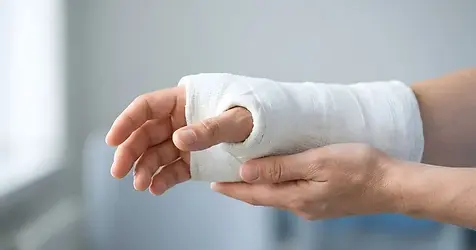
Common complications we see
Carpal Tunnel Syndrome
Compression of the median nerve at the wrist.
Causes : Repetitive wrist flexion, diabetes, hypothyroidism, pregnancy, fractures.
Symptoms : Numbness in thumb, index, middle, and radial half of ring finger. Night pain, weakness of thumb pinch.
Management : Night splints, NSAIDs, activity modification. Steroid injection for temporary relief. Endoscopic or open carpal tunnel release if conservative care fails or thenar wasting develops.
Trigger Finger / Stenosing Tenosynovitis
The flexor tendon catches in the A1 pulley.
Causes: Repetitive gripping, diabetes, rheumatoid arthritis.
Symptoms: Painful clicking or locking of finger when flexing/extending. Morning stiffness.
Management: NSAIDs, splinting, steroid injection into tendon sheath. Percutaneous or open A1 pulley release for recurrent cases.
De Quervain’s Tenosynovitis
Inflammation of abductor pollicis longus and extensor pollicis brevis tendons.
Causes: New mothers, repetitive thumb/wrist motion, texting.
Symptoms: Pain at radial wrist, positive Finkelstein test.
Management: Thumb spica splint, ergonomic changes, steroid injection. Surgical release of the first dorsal compartment if symptoms persist.
Distal Radius Fracture
One of the most common upper limb fractures.
Complications : Malunion causing wrist deformity, stiffness, post-traumatic arthritis. Complex Regional Pain Syndrome with disproportionate pain, swelling, and colour changes. EPL tendon rupture 3–12 months post-fracture due to hardware or bone spur.
Management : Accurate reduction and fixation, early mobilization. Prompt physio for CRPS. Tendon transfer if EPL ruptures.
Lateral Epicondylitis / Tennis Elbow
Degeneration of extensor carpi radialis brevis origin.
Causes: Overuse of wrist extensors in racquet sports, manual work.
Symptoms: Lateral elbow pain, weak grip, pain with wrist extension.
Management: Eccentric strengthening, counterforce brace, PRP injection. Arthroscopic debridement for recalcitrant cases >12 months.
Post-traumatic Stiffness
Common after fractures, surgery, or prolonged immobilization.
Causes : Capsular adhesions, tendon adherence, edema. Shoulder, elbow, and finger joints most affected.
Management : Early controlled motion is best prevention. Aggressive hand therapy, dynamic splints, serial casting. Arthroscopic capsular release or tenolysis if stiff >6 months.

.jpeg)
General principles to prevent complications
-
Respect the soft tissues – Gentle handling during surgery reduces fibrosis and stiffness.
-
Early motion – Most protocols now favor early active movement after stable fixation to prevent tendon adhesions.
-
Edema control – Elevation, compression, and motion prevent the “stiff hand” spiral.
-
Patient education – Teach home exercises, splint use, and red-flag signs like increasing pain, color change, or numbness.
-
Nerve monitoring – Protect median, ulnar, and radial nerves during fixation; document pre-op neuro status.
When to refer to a Surgeon
Progressive numbness or weakness, non-healing fractures >3 months, established contractures, failed injections, or complex regional pain syndrome. The hand tolerates errors poorly – timely subspecialist input preserves function.
The Bottom Line
Hand and upper limb complications often start small but can end with major disability. Meticulous initial treatment, patient-specific rehab, and early escalation when progress stalls give the best outcomes.